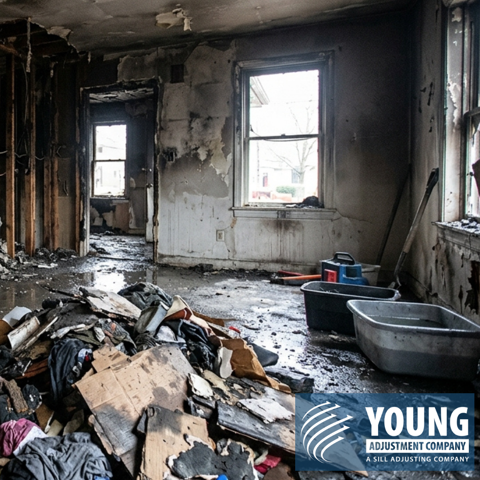
When Fire or Water Damage Extends Beyond the Building Envelope
A fire, pipe burst, or water intrusion loss does not stop at drywall, flooring, and framing. In residential, commercial, multi-family, and mixed-use properties, contents damage often becomes one of the most disputed parts of the claim. Furniture, electronics, tenant improvements, stock, records, equipment, and soft goods can sustain direct damage, smoke contamination, or water migration that is not obvious in the first inspection.
That is where a contents inventory after fire or water damage becomes essential. The policyholder must prove what was present, what was damaged, what can be restored, and what must be replaced. If that documentation is incomplete, the carrier’s valuation will often trend low, and recovery can stall while operations, occupancy, or normal use remain disrupted.
For East Coast property owners facing a major loss, Young Adjustment Company can review the contents portion of the claim at 800.345.8321 or youngadjustment.com.
The first days of documentation matter
In the immediate aftermath, many owners focus on drying, debris removal, or temporary relocation. Those steps may be necessary, but a rushed cleanup can erase evidence. Smoke residue patterns, moisture spread, damaged packaging, warped casework, and affected inventory all help establish the true scope of loss and support replacement-cost entitlement.
A room-by-room or area-by-area inventory creates the foundation. In a home, that may include bedrooms, kitchen, basement, and garage. In a commercial property, it may extend to offices, storage rooms, server areas, production floors, and leased spaces.
Why Carriers Scrutinize Contents Claims So Closely
Independent adjusters and carrier consultants typically evaluate contents under tight timelines and policy-specific valuation rules. They may request photographs, receipts, age of items, model numbers, vendor quotes, and proof of ownership. When those records are missing, depreciation disputes begin quickly, and the scope may be narrowed to only the most visible damage.
Common valuation gaps in fire and water claims
A carrier may question whether an item was physically damaged, whether cleaning is sufficient, or whether replacement is justified. In water losses, hidden migration can affect boxed contents, lower shelving, paper files, textiles, and electrical components. In fire losses, smoke, soot, and corrosive residue can make contents unsafe or non-restorable even when no flames touched them directly.
Commercial claims add another layer. If contents include equipment, tenant property, stock, or mission-critical materials, undercounting those assets can delay reopening and create larger business interruption exposure. A weak inventory does not just reduce the property payment. It can prolong downtime and complicate BI calculations tied to damaged contents, suspended operations, and lost revenue.
If the carrier is pressing for fast numbers before the contents scope is fully documented, speak with Young Adjustment Company at 800.345.8321 or visit youngadjustment.com.
How a Public Adjuster Builds a Defensible Contents Inventory
A proper contents inventory after fire or water damage is not a rough list from memory. It is a forensic claim document. The process starts by separating items by room or operational area, then identifying description, brand, model, age, quantity, condition, and replacement-cost basis. Photographs, videos, receipts, credit card statements, online order histories, maintenance logs, and vendor records all strengthen the file.
Room-by-room and asset-by-asset proof
For a residential claim, an entry might read: primary bedroom dresser, solid wood, six-drawer, smoke-damaged, purchased 2021, supported by pre-loss photo and retail replacement comparable. For a commercial claim, the inventory may include workstation hardware, file storage systems, point-of-sale devices, warehouse shelving contents, and damaged stock by SKU or category.
A public adjuster also tracks what carriers often miss: concealed moisture impact, mold exposure, contamination spread, and code-related implications for built-in contents or specialized equipment. Since 1920, Young Adjustment Company has seen that the strongest claims are built on disciplined documentation, not assumptions.
For a forensic review of hidden contents damage and valuation support, call 800.345.8321 or go to youngadjustment.com.
Documentation that supports full claim recovery
Receipts are helpful, but they are not the only proof. Tax records, supplier invoices, appraisals, move-in photos, employee statements, and prior inspection reports can all corroborate ownership and value. In larger losses, contents spreadsheets should align with the broader scope-of-loss, mitigation records, and business interruption worksheets so the property claim and revenue claim support each other.
That coordination matters. If essential contents are omitted or undervalued, the rebuild may be funded on paper while actual operations remain impaired.
A Complete Inventory Supports a Fair Settlement and Faster Recovery
Fair claim resolution means more than a partial contents payment. It means a documented path to replace damaged property, support code-compliant restoration, avoid premature claim closure, and keep the policyholder positioned to resume occupancy or business activity without unnecessary delay. A complete inventory helps establish the real cost of recovery and puts the policyholder in a stronger negotiating position throughout the claim.
The inventory is not paperwork; it is leverage
When the contents claim is properly assembled, it becomes harder to under-scope damage, apply unsupported depreciation, or overlook covered categories. That is why a public adjuster serves as more than a vendor. For residential and commercial policyholders, the role is to stand between the owner and the carrier, protect the economics of the claim, and accelerate the path back to normal operations.
If your contents claim involves fire, smoke, water migration, or disputed replacement-cost valuation, contact Young Adjustment Company at 800.345.8321 or visit youngadjustment.com.