Hurricane Losses Begin Long Before the Building Dries
When a hurricane or tropical storm tracks along the East Coast, the immediate concern is obvious: wind damage, roof breaches, broken glazing, and wind-driven rain entering the structure. For commercial buildings, multi-family properties, houses of worship, retail centers, and light industrial facilities across eastern Pennsylvania and Greater Philadelphia, the threat from these storms primarily involves heavy rain and strong winds. That initial opening in the building envelope is often only the start of the loss.
Wind-Driven Rain Rarely Stays in One Place
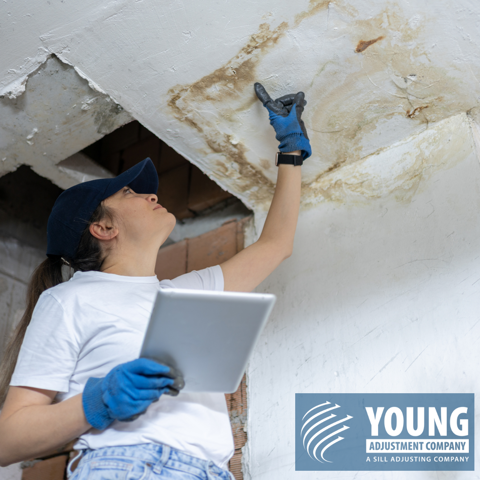
Water moves fast and far. During hurricanes and tropical storms, wind-driven rain can travel behind exterior wall systems, migrate through insulation cavities, saturate roof assemblies, damage electrical components, and compromise ceiling systems well beyond the visible stain. On the ground level, stormwater intrusion can affect flooring, tenant improvements, inventory, machinery, records, and essential building systems.
The operational impact can be immediate. A property owner may be dealing with partial shutdowns, unsafe occupied areas, displaced tenants, damaged stock, interrupted production, or lost revenue tied to inaccessible space. What appears to be a simple water damage claim can quickly become a complex commercial loss with structural, contents, and time-element components.
For a prompt policy review after hurricane or tropical storm damage, call 800.345.8321 or visit youngadjustment.com.
Carrier Evaluations Often Miss the Full Scope of a Hurricane Water Damage Claim
Insurance carriers move quickly after a regional storm, but speed does not guarantee completeness. Initial inspections are often designed to establish visible damage and issue a preliminary position, not to fully develop hidden moisture migration, code exposure, or the true business impact of the event.
Where Valuation Gaps Commonly Develop
A carrier inspection may separate wind from water too narrowly, under-scope interior damage, or treat wet materials as isolated rather than system-wide. Depreciation disputes can reduce recoverable value. Drying directives may be issued before the full extent of damage is documented. In some files, ordinance and law implications, debris handling, professional fees, and protective safeguard issues are not analyzed until much later, if at all.
Business interruption adds another layer. Extra expense, loss of rents, reduced occupancy, delayed reopening, and production slowdowns require disciplined documentation. Without well-supported financial worksheets and operational narratives, time-element damages are often minimized or left unresolved while the physical damage portion of the claim moves ahead.
If your hurricane or tropical storm claim involves downtime, tenant disruption, or lost income, speak with Young Adjustment Company at 800.345.8321 or start at youngadjustment.com.
Forensic Claim Preparation Changes the Outcome
A public adjuster’s role is not limited to attending inspections. The work begins with properly building the claim: defining the cause and origin, documenting all affected components, and tying the physical damage to financial loss in a way the policy allows.
Building the Scope Before the Claim Is Boxed In
That means comprehensive site documentation, moisture mapping, review of roof and exterior envelope failures, analysis of concealed wet areas, and coordination with qualified experts when structural compromise, microbial growth, or equipment damage is suspected. It also means developing a room-by-room and system-by-system scope of loss, supported by photographs, repair logic, vendor estimates, and replacement cost analysis.
Contents and equipment losses must be separately tracked. Tenant improvements, furniture, fixtures, electronics, raw materials, and finished goods each require inventory discipline and valuation support. If emergency measures were necessary to stabilize the property, those costs must be preserved and tied back to the covered event.
Time-Element Damages Require the Same Rigor
For commercial policyholders, a fair outcome also depends on proving what the interruption actually cost. A public adjuster assembles business income worksheets, extra expense records, leasing disruption support, and restoration timelines that reflect real-world operations rather than abstract assumptions. Since 1920, Young Adjustment Company has brought that claim-building discipline to policyholders who need more than a basic inspection.
To request a forensic damage assessment and claim review, call 800.345.8321 or visit youngadjustment.com.
Fair Recovery Supports Continuity, Not Just Repairs
The objective in a hurricane or tropical storm claim is not merely to dry the building and patch visible damage. The objective is full recognition of the covered loss: building repairs, concealed damage, code-required upgrades when triggered, damaged contents, and the revenue impact from interrupted operations and delayed restoration.
Why Proper Advocacy Matters to the End Result
When the claim is documented with precision and negotiated with discipline, the policyholder is in a stronger position to avoid premature closure, unsupported denials, and underfunded repair scopes. That protects more than the structure. It protects occupancy, cash flow, tenant relationships, operational continuity, and the timeline for rebuilding.
For East Coast property owners and organizations facing hurricane or tropical storm damage, Young Adjustment Company serves as a strategic asset standing between the policyholder and the carrier through the life of the claim. To discuss a residential or commercial property loss in Greater Philadelphia or eastern Pennsylvania, call 800.345.8321 or visit youngadjustment.com.